Do Men Need Moisturizer?
Short answer: yes. Long answer: it depends on which moisturizer, and why — and the reasons are more interesting than you’d think.
By Nate Calder · Updated
Key Takeaways
- Yes — every skin type, including oily, needs a moisturizer to maintain a healthy skin barrier
- Without a functional barrier, skin loses water (TEWL), becomes reactive, and ages faster
- Skipping moisturizer because you have oily skin actually increases oil production — the opposite of what you want
Yes, Men Need Moisturizer
The skin barrier — formally called the stratum corneum — is a layer of dead skin cells held together by lipids (fats) that acts as your body’s first line of defense against the environment. Its job is twofold: keep harmful things out (bacteria, UV radiation, pollutants), and keep good things in (water, primarily).
When the barrier is compromised, your skin loses water through a process called transepidermal water loss (TEWL). This leads to dehydration even in people with naturally oily skin, creating a cascade of problems: increased reactivity, faster visible aging, more inflammation, and paradoxically — more oil production as the skin tries to compensate for moisture loss.
A moisturizer’s primary job is to support this barrier. It does this through three mechanisms: occlusives (like petrolatum or dimethicone) that form a film to prevent water loss, humectants (like hyaluronic acid or glycerin) that draw water into the skin, and emollients (like ceramides or squalane) that fill in the gaps in the barrier structure itself. A well-formulated moisturizer does all three to some degree.
The Myth: Only Dry Skin Needs Moisturizer
This is the most persistent misconception in men’s skincare. The logic goes: “My face is already oily — adding more moisture will make it worse.” It’s understandable, but it’s backwards.
Oily skin is caused by overactive sebaceous glands producing excess sebum — an entirely different substance from the water-based hydration that moisturizers provide. When oily skin is dehydrated (low water content despite high oil), sebaceous glands often respond by producing even more oil, compounding the problem.
The solution isn’t skipping moisturizer — it’s choosing the right formula. Lightweight gels and water-based lotions provide hydration without adding to oiliness. Products labeled “non-comedogenic” and “oil-free” are designed precisely for this. The CeraVe PM Lotion and Neutrogena Hydro Boost are benchmark examples of moisturizers that work well for oily skin.
What a Good Moisturizer Actually Does
Beyond preventing water loss, a well-formulated moisturizer does several practical things you’ll notice over time. Skin stays smoother and more resilient — less likely to flake after washing, less reactive to cold weather or dry air. Fine lines caused by dehydration (not collagen loss) become noticeably less prominent within days of consistent use.
For men who shave, this matters even more. Shaving mechanically disrupts the skin barrier with every stroke of the blade. Using a moisturizer after shaving restores the barrier quickly, reduces post-shave redness, and lowers the risk of ingrown hairs by keeping the skin supple.
Long-term, maintaining a healthy barrier slows visible aging. Skin that is consistently hydrated retains its elasticity, resists fine line formation, and recovers faster from environmental damage. Dermatologists consistently rank moisturizer (alongside SPF) as one of the two most impactful anti-aging interventions available without a prescription.
How to Pick the Right Moisturizer for Your Skin
Oily or Combination Skin
Texture: Water gel or lightweight lotion
Avoid: Heavy creams, oils, occlusive formulas
Look for: Oil-free, non-comedogenic, gel-cream or water-gel textures
Dry Skin
Texture: Rich cream or balm
Avoid: Watery serums as a sole moisturizer
Look for: Ceramides, shea butter, hyaluronic acid, colloidal oatmeal
Normal / Balanced Skin
Texture: Lightweight lotion
Avoid: Nothing specific — most formulas will work
Look for: Ceramides, SPF combo if you want simplicity
Sensitive Skin
Texture: Fragrance-free lotion or cream
Avoid: Anything with fragrance, alcohol, or essential oils
Look for: Minimal ingredient lists, dermatologist-tested, hypoallergenic
Morning moisturizers ideally include SPF — a two-in-one that removes a step from your routine. Night moisturizers can be richer since you’re not applying makeup or SPF on top, and your skin’s repair processes are most active during sleep.
Our Top Moisturizer Picks
La Roche-Posay
Cicaplast Baume B5+
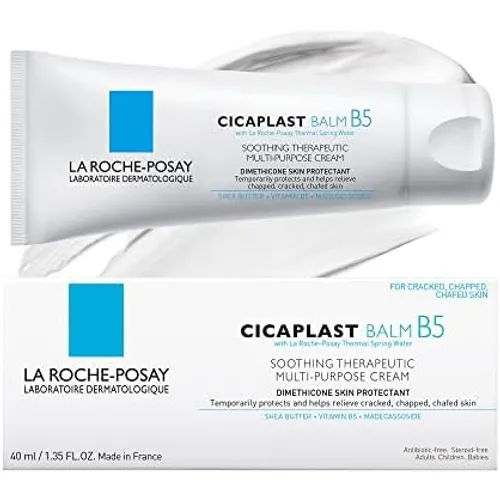
The dermatologist's emergency repair cream. Fixes irritated, over-exfoliated, post-shave wrecked skin overnight.
Best for
Dry, Normal, Combination
Key ingredients
Panthenol (B5), Madecassoside, Shea butter, Zinc/Manganese/Copper
When to use
Night only
CeraVe
AM Facial Moisturizing Lotion SPF 30
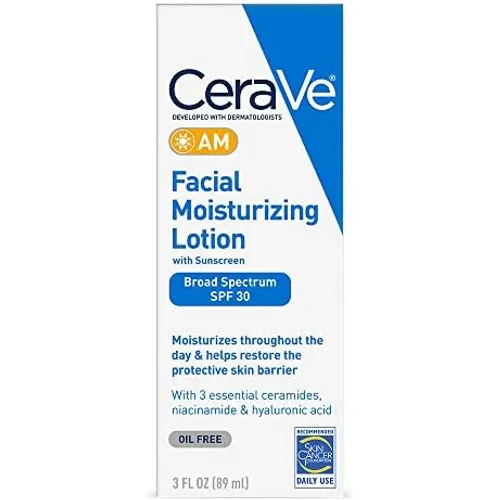
Moisturizer and SPF in one bottle. The ultimate morning shortcut.
Best for
Normal, Combination, Oily
Key ingredients
Ceramides, Niacinamide, Zinc oxide (SPF 30)
When to use
Morning only
CeraVe
PM Facial Moisturizing Lotion
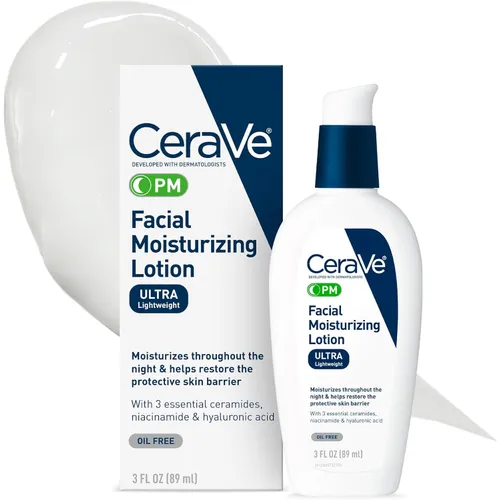
Your skin fixes itself overnight. This gives it what it needs to do the job.
Best for
Oily, Normal, Combination, Dry
Key ingredients
Ceramides, Niacinamide, Hyaluronic acid
When to use
Night only
Find Your Perfect Moisturizer
Answer 5 quick questions about your skin type and concerns — we'll recommend the right moisturizer and build your full AM/PM routine.
Build My Routine