Best Sunscreen for Men Working Outside
By Nate Calder · Updated · How we pick
Quick Picks
If you’ve given up on sunscreen because it runs into your eyes by mid-morning, the problem was the product rather than your tolerance. Sweat carries ordinary facial SPF off your skin and into your eyes, where chemical filters burn. These 4 are the ones built to stay where you put them — 4 of the 18 sunscreens we list carry a water-resistance claim at all.
Full Reviews
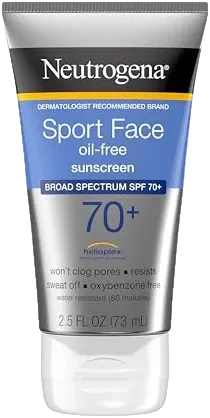
Neutrogena
Sport Face Sunscreen Lotion SPF 70+
SPF 70+ in a face-specific formula rather than a body one.
- Best for
- Oily, Combination, Normal
- Key ingredient
- Avobenzone, Homosalate
- When
- Morning only
Why we picked it
Most sport sunscreen is body sunscreen that people also put on their face, which is why it congests and stings. This is the face-specific version — non-comedogenic, oil-free and oxybenzone-free, lighter than the body lotions, and at SPF 70+ it carries enough margin for the under-application everyone is guilty of. The pick for long days outdoors if your skin isn't reactive.
Why it works
- SPF 70+ margin for under-application
- Non-comedogenic and oxybenzone-free
- 80-minute water resistance
- Under $12
Watch out for
- Chemical filters can sting reactive skin
- Not fragrance-free
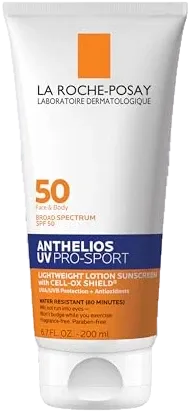
La Roche-Posay
Anthelios UV Pro-Sport SPF 50
Broad UVA/UVB protection in a sport formula that stays put through a day outside.
- Best for
- Dry, Normal, Combination, Oily
- Key ingredient
- Cell-Ox Shield filters, Antioxidants
- When
- Morning only
Why we picked it
Anthelios Pro-Sport carries La Roche-Posay's Cell-Ox Shield system, broad UVA/UVB filters paired with antioxidants, in a non-greasy lotion that stays put through 80 minutes of sweat and water and won't drip into your eyes. It's fragrance-free, goes on without a white cast, and the 6.7oz bottle covers face and body, so one bottle handles a full day of training outside.
Why it works
- Broad UVA/UVB filters with antioxidants
- 80-minute water resistance
- 6.7oz covers face and body
- Fragrance-free, no white cast
Watch out for
- Premium price for a sport sunscreen
- Big bottle is bulky in a gym bag
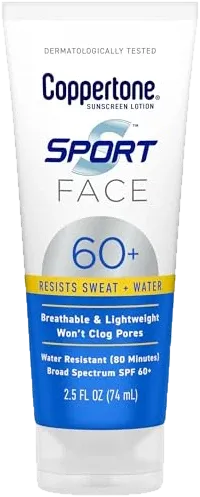
Coppertone
Sport Face Sunscreen SPF 60+
Won't run into your eyes when you sweat. That's the entire job and it does it.
- Best for
- Oily, Combination, Normal
- Key ingredient
- Avobenzone, Homosalate
- When
- Morning only
Why we picked it
The specific failure of ordinary facial sunscreen outdoors is that it migrates into your eyes with sweat and stings for the next twenty minutes — which is why men who work or train outside stop wearing it. This is formulated to stay put for 80 minutes of water or sweat exposure, and at under $11 you can keep one in a bag and stop rationing it.
Why it works
- 80-minute water resistance
- Doesn't run into the eyes
- Under $11
- Fragrance-free and won't clog pores
Watch out for
- Chemical filters can sting reactive skin
- Water resistance tops out at 80 minutes
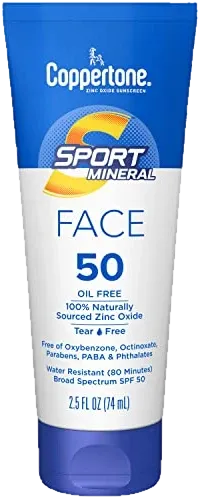
Coppertone
Sport Mineral Face Sunscreen SPF 50
Zinc that stays put. The sport option for skin that reacts to chemical filters.
- Best for
- Dry, Normal, Combination
- Key ingredient
- Zinc oxide
- When
- Morning only
Why we picked it
Chemical filters are the usual cause of sunscreen stinging around the eyes, and sweat makes that worse — so men with reactive skin get the worst of both outdoors. A zinc-based sport formula sidesteps it: the filter sits on the skin rather than reacting in it, and it's built to survive 80 minutes of sweat. Expect visible cast, which is the mineral trade.
Why it works
- Zinc oxide only — no stinging
- 80-minute water resistance
- Under $15
- Fragrance-free and won't clog pores
Watch out for
- Noticeable white cast
- Thicker than a chemical sport formula
Sort the Rest of the Routine
Sunscreen is the step that matters most outdoors. Answer 5 quick questions and we'll build the cleanser and moisturizer around it.
The full guide
How to choose
Look for
- “Water resistant” on the bottle means it's tested to stay put through 40 or 80 minutes of sweat, so it stays on your face instead of running into your eyes.
- SPF 50 or higher gives you margin for under-applying, which matters more over an eight-hour shift than over a commute.
- A face-specific formula protects without the clogged pores body sunscreen leaves on a face.
- Mineral filters, if your eyes are sensitive sting less than chemical filters when sweat does carry some down.
Skip
- Everyday office sunscreen isn't built to survive sweat, so it slides into your eyes by mid-morning.
- Body sunscreen on your face causes the breakouts men blame on sunscreen in general.
Stinging eyes mean the product moved, not that you can't wear sunscreen.
Get through the shift
- Reapply every two hours, and right after heavy sweating or toweling off.
- Cover your ears, the back of your neck and your forearms, the places outdoor workers burn.
Frequently Asked Questions
What's the best sunscreen for working outside all day?
A water-resistant, face-specific formula at SPF 50 or higher. Neutrogena Sport Face SPF 70+ at $11.88 is the best balance of protection and price; Coppertone Sport Face SPF 60+ at $10.48 does the same job for less. The word that matters on the bottle is "water resistant" — without it, sweat moves the product off your face within the hour.
Why does sunscreen sting my eyes when I sweat?
Because it's migrating. Sweat picks up sunscreen that isn't bound to the skin and carries it into your eyes, where chemical filters in particular burn. That's the single most common reason men who work or train outside abandon sunscreen entirely — it isn't a tolerance problem, it's the wrong product. A water-resistant sport formula stays put; a mineral one stings less if it does reach your eyes.
How often should you reapply sunscreen when working outside?
Every two hours, and immediately after heavy sweating or toweling off. Water resistance is rated at 40 or 80 minutes, not all day — the claim on the bottle is how long it survives immersion or sweat, after which the protection degrades regardless of the SPF number. Applying once at 7am and assuming you're covered until 5pm is the most common mistake outdoor workers make.
Is SPF 50 enough for working outdoors?
It's the sensible floor, and higher is genuinely useful here. SPF 50 blocks about 98% of UVB against SPF 30's 97% — a small difference in the lab, but the lab assumes a quarter-teaspoon applied evenly and most men use a third of that. A higher SPF buys margin for the under-application everyone is guilty of, which matters more over eight hours than over a commute.
What about ears, neck and forearms?
They're where outdoor workers actually burn, and they're what facial sunscreen bottles are too small to cover. Ears and the back of the neck are among the most common sites for skin cancers in men who work outside, and both are easy to miss. Buy a size you won't ration — the La Roche-Posay Pro-Sport is 6.7oz for face and body precisely for this.